Short answer: there is no universal best hash washer. The right machine is the smallest sanitary, controllable system that handles your normal batch without chronic overloading. For current Hashtek equipment, that means the BubbleTek 10 for up to 2.5 kg of fresh frozen material, the BubbleTek 20 for up to 5 kg, the BubbleTek 30 for up to 7.5 kg, the A-Series for a modular craft-production setup with a published capacity up to 12 kg in its 50-gallon configuration, and the 85t for an integrated commercial workflow where quality-focused operators commonly run 12–15 kg per batch.
If you are washing occasional personal batches and purchase price matters more than sanitary stainless construction, a hand-wash setup or inexpensive portable washer may be a more rational choice than professional equipment. A machine should solve a real production problem, not simply be the most expensive object in the room.
Disclosure: Hashtek manufactures the equipment discussed here. This guide uses capacities and features published on our current product pages and spec sheets. We have separated fit recommendations from product facts, and we encourage buyers to compare those facts with their own batch data, facility requirements, and competing systems.
Our quick recommendations
| Normal fresh-frozen batch | Best-fit Hashtek washer | Why it fits |
|---|---|---|
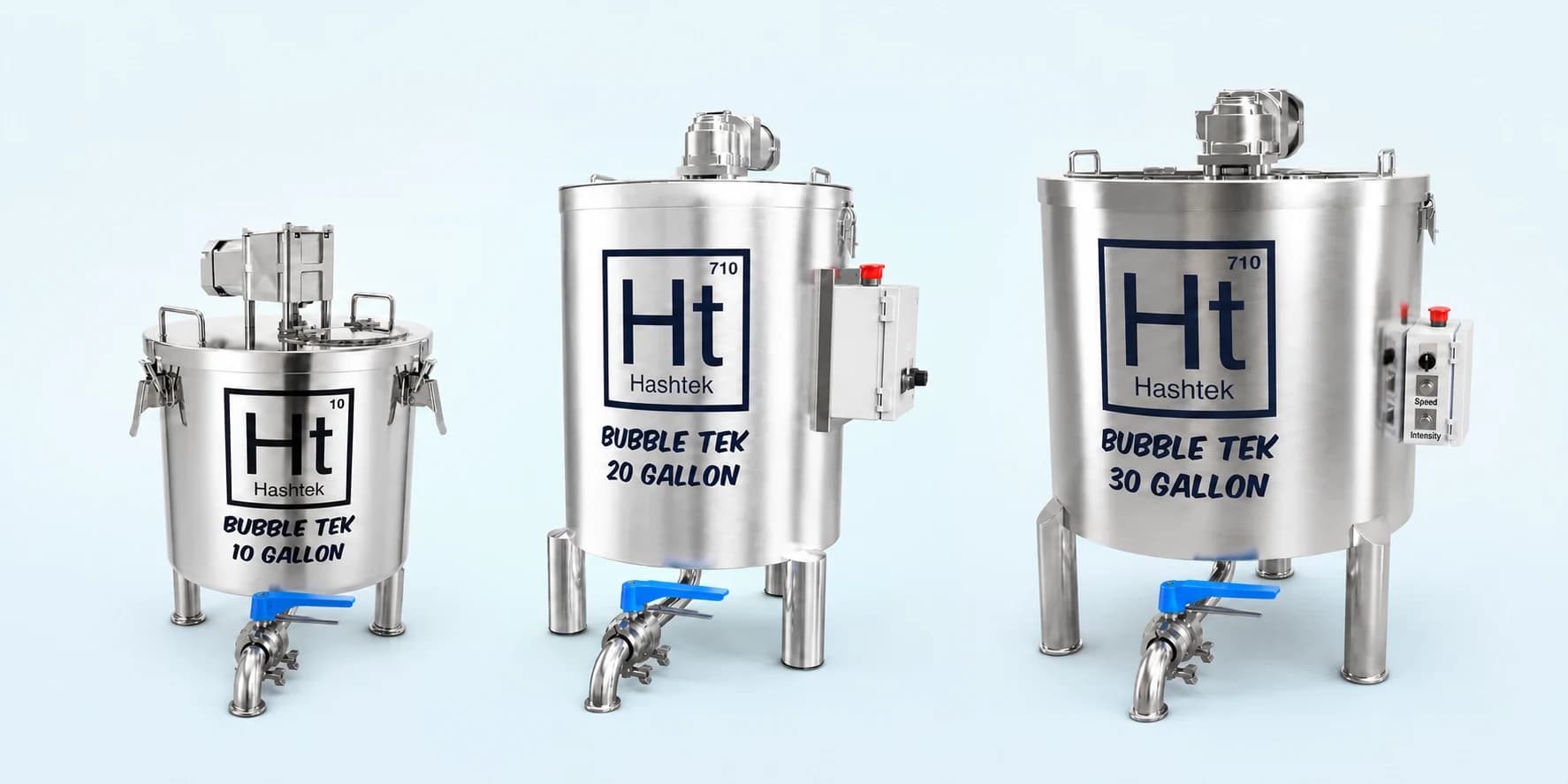
| Up to 2.5 kg / 5.5 lb | BubbleTek 10 Gallon | Compact stainless format for phenotype hunts, test washes, R&D, and small rooms. |
| Up to 5 kg / 11 lb | BubbleTek 20 Gallon | A practical craft-production step with Analog Control 2.1, a mesh basket, conical drain, and recirculation inlet. |
| Up to 7.5 kg / 16.5 lb | BubbleTek 30 Gallon | More batch capacity in the same compact BubbleTek workflow; useful for quality-focused small production. |
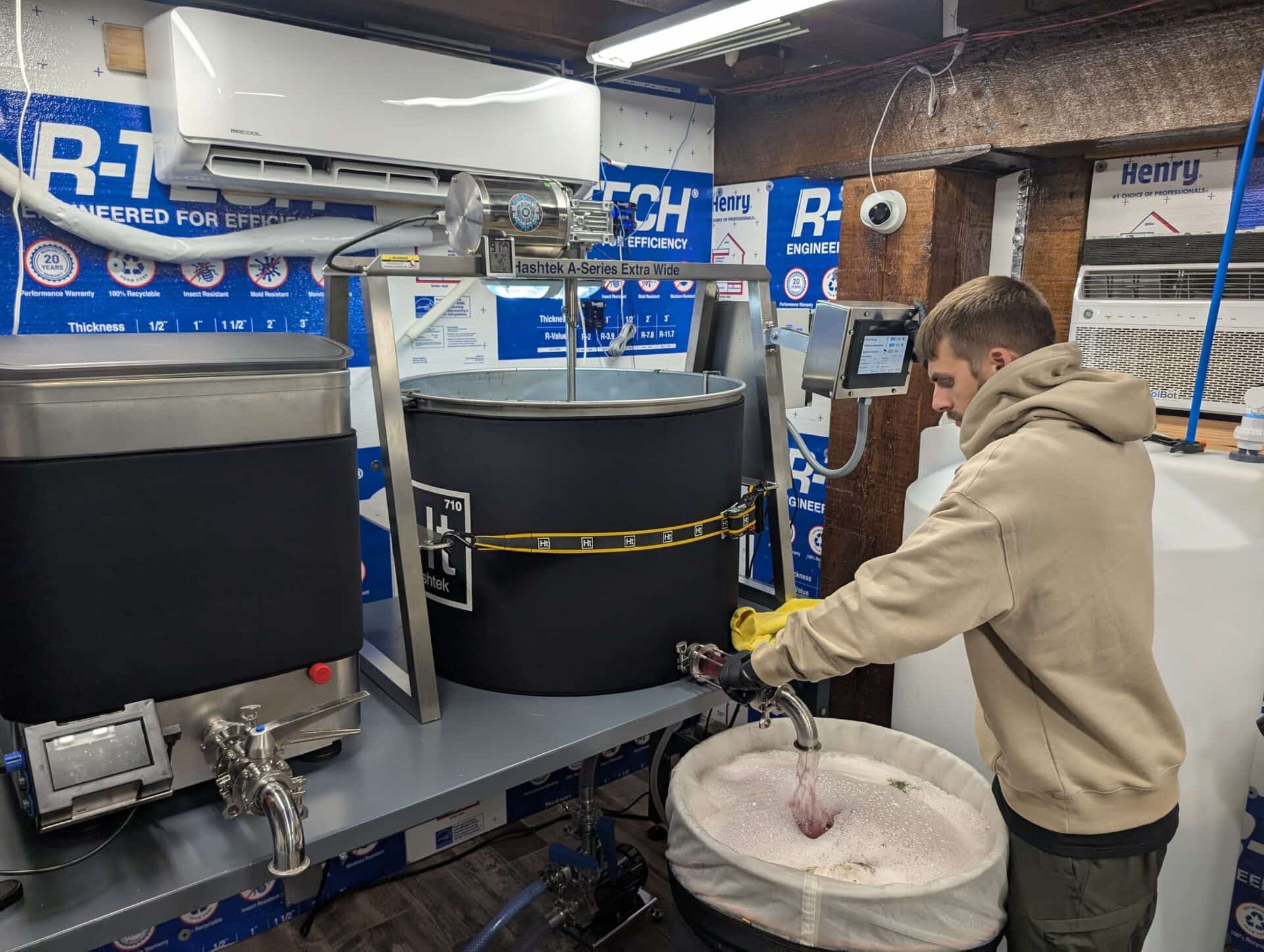
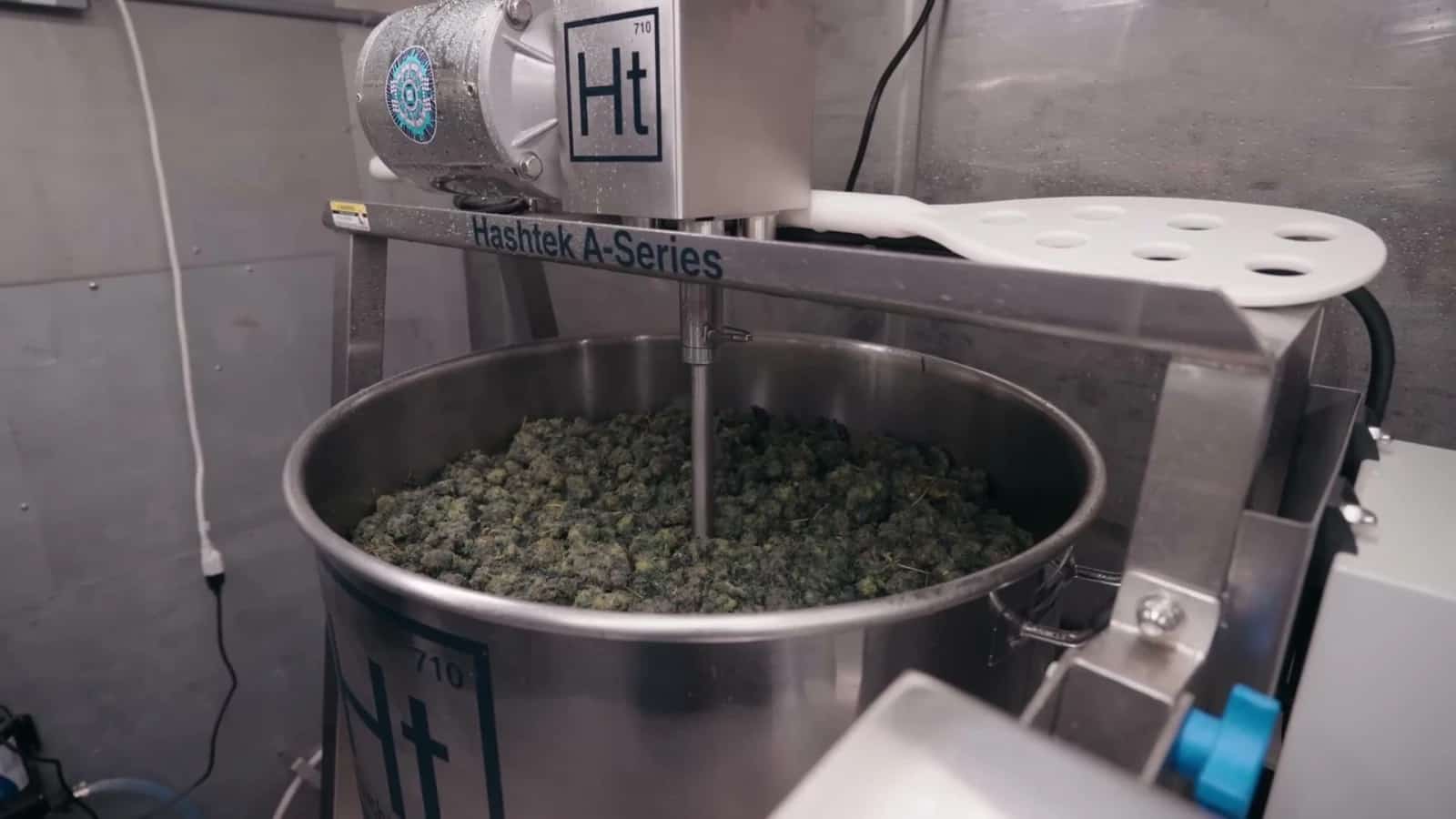
| Up to 12 kg / 26.5 lb in the published 50-gallon setup | Hashtek A-Series | Modular top-down agitation, multiple compatible vessel sizes, removable paddle, and analog or LCD control options. |
| Typically 12–15 kg / 26–33 lb for quality-focused production | Hashtek 85t | An integrated 85-gallon commercial system with recirculation hardware, sanitary piping, tip-to-empty operation, and a single-operator design. |
These figures describe material capacity, not expected hash yield. Yield varies with cultivar, plant health, harvest timing, storage, micron range, and operator decisions. No honest equipment comparison can promise a fixed return from machine size alone.
What actually makes a hash washer good?
A useful comparison begins with the process, not the logo. Ice water extraction asks the machine to move cold water and material enough to release ripe trichome heads while limiting the plant damage that can add contamination. That makes control, geometry, and operator visibility more important than raw motor power.
1. Agitation you can control and repeat
A good washer lets the operator change intensity instead of accepting one aggressive factory setting. Repeatable forward and reverse cycles help a team document what worked, but automation is only valuable when the operator can still adapt to cultivar, material condition, and pull number. The BubbleTek line uses Analog Control 2.1; the A-Series can be ordered with analog or 7-inch LCD control; the 85t uses an industrial LCD and variable-frequency drive control.
2. Sanitary, inspectable product-contact surfaces
Resin, plant material, and cold water reach every difficult corner. Smooth stainless surfaces, sanitary fittings, a clear drain path, and components that can be removed or inspected reduce the places where residue can hide. This matters for flavour carryover, cleaning time, and a professional sanitation program. Stainless construction alone is not enough: buyers should inspect valves, threads, hoses, baskets, welds, and the path from the wash vessel to collection.
3. A batch size that matches real production
Buying for a hypothetical maximum can create poor small-batch geometry, more cleaning, and unnecessary capital cost. Buying too small creates the opposite problem: repeated runs, rushed cleaning, and overloaded vessels. Use a few months of actual harvest or procurement data, identify the batch you will run most often, and size around that number.
4. A complete water and collection workflow
The washer is only one station. Before purchasing, map cold-water supply, agitation, drain or recirculation, collection bags or sieving, rinse water, waste handling, freeze-dryer loading, and cleanup. A fast washer feeding a slow collection station does not create a fast lab. Hashtek’s free floor planner can help check equipment footprints and aisle space before the room is built.
5. Service, documentation, and room fit
Confirm voltage, plug, overall dimensions, door clearance, floor loading, drain location, lead time, replacement parts, and warranty before ordering. Product pages and public spec sheets are useful starting points, but a final equipment schedule should use the current drawing and order-specific configuration.
BubbleTek: best fit for compact craft and R&D batches
BubbleTek is the simplest place to start in the Hashtek washer range. Each current model uses 304 stainless construction, a 500-micron stainless mesh basket, automated forward and reverse agitation, a conical drain, a viewport lid, a recirculation inlet, and an emergency stop. The basket lifts out with the biomass, which keeps the post-wash workflow straightforward.
- 10 Gallon: up to 2.5 kg fresh frozen. Choose it for phenotype work, test washes, very small production, or a tight room.
- 20 Gallon: up to 5 kg fresh frozen. This is the balanced craft option when 10 gallons is too small but 30-gallon batches are not yet routine.
- 30 Gallon: up to 7.5 kg fresh frozen. Choose it when the team can consistently supply and collect larger craft batches.
BubbleTek is not automatically the best choice for every commercial build. Its fixed all-in-one format is a strength when simplicity matters, but a lab that needs multiple vessel sizes, a bridge agitator over an existing tank, or a more integrated sanitary process may be better served by A-Series or 85t equipment.
A-Series: best fit for modular craft production
The Hashtek A-Series is a bridge-style, top-down agitator rather than an all-in-one basket washer. The current extra-wide frame accommodates tanks up to 65 gallons and the product specification lists compatibility with 20, 25, 30, 32, 44, 50, and 65-gallon vessels when correctly configured. Its removable stainless paddle, variable-direction control, and continuous-recirculation compatibility make it a flexible centrepiece for a room that may evolve.
The published A-Series product page states up to 12,000 g of fresh frozen material with the 50-gallon vessel. Treat that as a stated upper capacity, not a command to fill every wash to 12 kg. Material density and the operator’s desired movement still matter. A buyer retrofitting an existing tank should confirm tank diameter, brace, paddle, control type, voltage, table capacity, and sanitary connections with Hashtek before ordering.
The A-Series is our strongest all-around recommendation for a professional buyer who values modularity. It spans more room layouts and batch plans than a fixed washer, while retaining direct control over agitation. The tradeoff is that the surrounding tank, collection, pumps, hoses, and work surfaces must be planned as a system.
85t: best fit for an integrated commercial line
The Hashtek 85t moves from a modular machine to a turnkey commercial extraction system. The current specification lists an 85-gallon agitation vessel, 65-gallon collection vessel, sanitary stainless piping, two sanitary pumps, top-down agitation, continuous-recirculation compatibility, clean-in-place readiness, an interchangeable paddle, and the patented tip-to-empty system. It is designed for one operator at the washer, although collection, freeze drying, cleaning, and material handling may require more people.
The product specification gives a theoretical maximum of 25 kg fresh frozen and says quality-focused hashmakers typically run 12–15 kg per batch. That distinction is important. The best commercial washer is not the one with the biggest theoretical number; it is the system that repeatedly hits the lab’s quality target while the whole downstream process keeps pace.
Machine washing versus hand washing
A machine does not create quality by itself, and hand washing is not automatically gentler. Starting material, water temperature, ice management, soak time, agitation intensity, pull duration, and collection technique remain decisive. A well-matched washer helps make motion repeatable and reduces physical labour; a poorly loaded or overly aggressive machine can still damage material.
Hand washing remains useful for tiny cultivar tests, sensory learning, and operators who want direct paddle feedback. Machine washing becomes attractive when repetition, ergonomics, sanitation, or throughput is the constraint. For a deeper look at the evidence and tradeoffs, read Machine Washing vs. Hand Washing Hash.
Questions to ask every equipment manufacturer
- What fresh-frozen and dry-material capacities are published, and under what vessel configuration?
- Can agitation speed, direction, duration, and ramping be adjusted?
- Which surfaces contact product, and can each one be inspected and cleaned?
- How does trichome-rich water leave the vessel, and where can resin become trapped?
- What voltage, phase, plug, drain, water supply, floor loading, and door width are required?
- Which pumps, hoses, collection vessels, bags, controls, and safety devices are included?
- What is the documented cleaning procedure and realistic turnaround time?
- Which replacement parts are stocked, and who provides technical support?
- Can the manufacturer provide current drawings, spec sheets, warranty terms, and customer references?
- Does the machine fit the lab’s normal batch, or only its best-case marketing scenario?
How to choose without guessing
Start with your normal batch and map the entire process around it. If the answer is still unclear, bring Hashtek your target kilograms per wash, fresh-frozen or dry material, room dimensions, door width, available power, water and drain locations, desired collection method, and weekly production target. We can tell you when a smaller machine is enough as well as when a larger system is justified.
Explore the BubbleTek range, review the A-Series, see the integrated 85t commercial system, or contact Hashtek for a configuration review.
Want the capacities turned into daily, weekly and monthly numbers? Read hash washer throughput and ROI by machine.
Frequently asked questions
What is the best hash washer?
There is no single best hash washer for every lab. The best fit is the smallest sanitary, controllable machine that handles your normal batch without chronic overloading: BubbleTek 10 for up to 2.5 kg fresh frozen, BubbleTek 20 for up to 5 kg, BubbleTek 30 for up to 7.5 kg, A-Series for modular craft production up to 12 kg in the published 50-gallon configuration, and 85t for an integrated commercial workflow where quality-focused operators commonly run 12 to 15 kg per batch.
What size bubble hash washing machine do I need?
Size for the batch you run most often, not the largest harvest you might process once. Leave enough room for water and controlled material movement, then consider door width, drain access, power, collection capacity, and cleaning space before choosing a machine.
Is machine washing worse than hand washing for bubble hash?
Not inherently. Hash quality still depends on resin quality, temperature, soak time, agitation, and collection decisions. A suitable machine makes agitation repeatable; it does not replace operator judgment or make poor starting material produce premium hash.
What is the difference between BubbleTek and the Hashtek A-Series?
BubbleTek is a compact all-in-one stainless washer with an internal 500-micron mesh basket and fixed 10, 20, or 30-gallon format. The A-Series is a bridge-style top-down agitator that can be configured around multiple vessel sizes and is intended for a more modular craft or production workflow.
Can one operator run a commercial Hashtek washer?
The published 85t product specification says the integrated system is designed to be run by one operator. Real staffing needs still depend on collection, freeze drying, cleaning, material handling, facility procedures, and local compliance requirements.
Hashtek Dispatch
Want release and restock alerts for equipment like this?
Join the Hashtek Dispatch for early product drops, restocks, and practical tek — plus a one-time 5% welcome code for your first order.