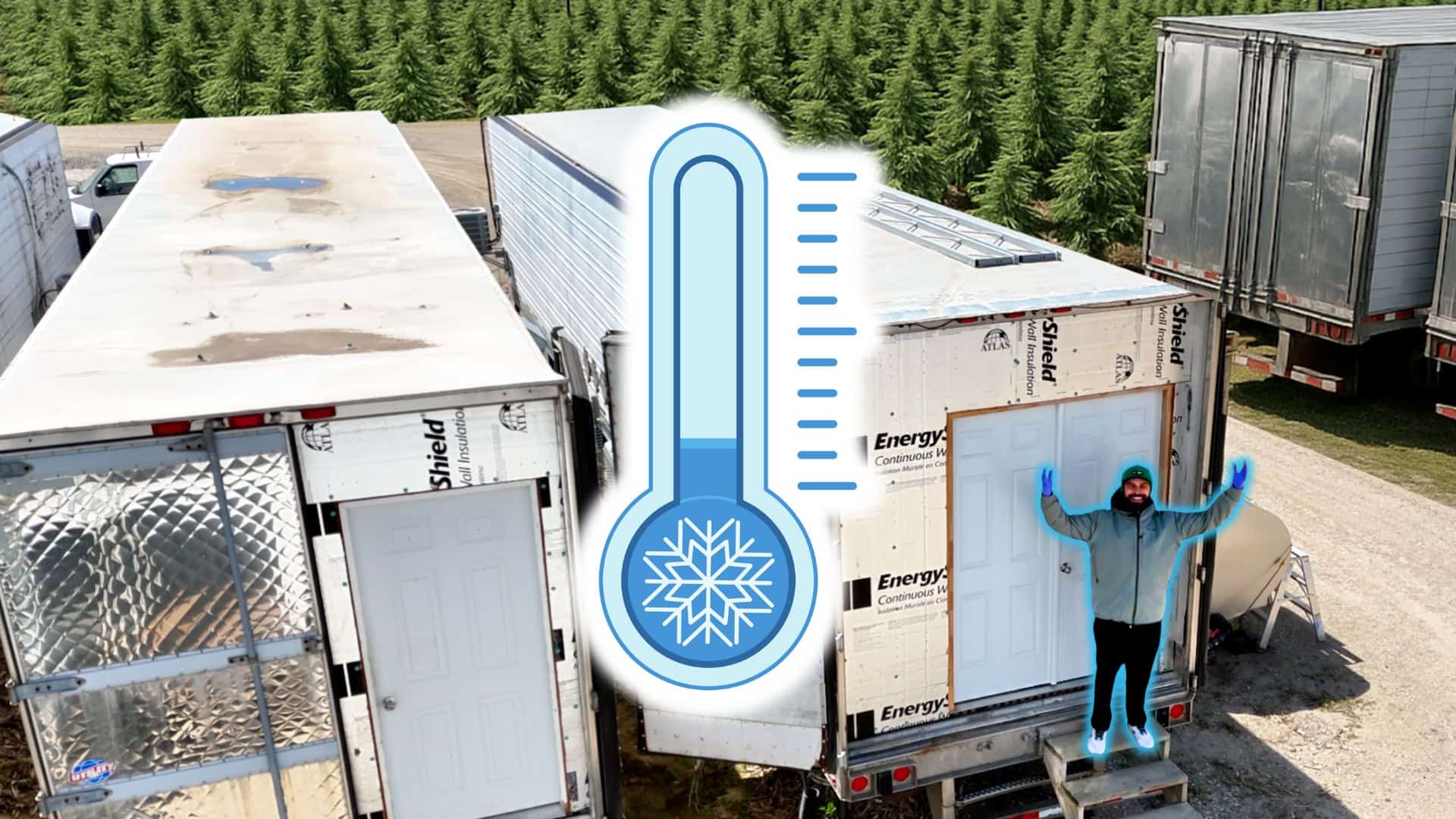
Hand stirred
4–5 kgMaximum tactile feedback, with output capped by effort and time.
Extraction Tips
The progression
Aaron's path shows how output increased while process feedback first disappeared, then returned at commercial scale.
Maximum tactile feedback, with output capped by effort and time.
More capacity, but less direct feedback from the material.
Commercial scale with control, cleaner early pulls, and reliable melt.
Aaron Munday is the Managing Partner and Founder of State 2 State Solventless LLC and operator of AMHG, a licensed cannabis processing facility.
“The problem, good or bad, has always been scaling.”
Too many pounds per light.
Not enough freezer space.
Backlogs from this farm and that farm.
Croptober… again.
It’s not a bad problem to have — especially in solventless. But eventually you hit a wall.
At some point every hash maker asks:
When you find yourself weighing your current output against its potential increase… should you scale? And how?
It’s not like test driving a car.
There’s no “here’s the keys, take it for a spin.”
It’s expensive. Real expensive.
Car-money expensive. Wedding expensive.
And once you buy, you’re committed.
This is Aaron’s path.
Aaron started where many of us do: paddle in hand.
His final manual setup:
Three batches a day. Four to five days a week.
Prep. Process. Wet work. Repeat.
“Effort = Output.”
And then growth hit.
Two new partner farms. More material. More volume. More pressure.
“I remember thinking to myself, and later that evening to my wife, ‘Oh shit, I’ve got to scale. AND FAST.’”
Aaron chose the Mini Osprey from Low Temp Industries.
With recirculation and bags, the investment landed just under $11,000.
Production jumped immediately:
Scaling step one? Successful.
But something changed.
“When I had my hands around a paddle, I could FEEL and HEAR the material. It told me how fast to spin. When to slow down. When it was okay to speed up. What direction it preferred.”
“With the Osprey it all went silent.”
RPMs became guesswork. There was little real technique available publicly. Over time, he found consistency across cultivars.
But one thing kept eluding him:
True sticky six-star.
“I managed to find consistency among batches… Melt though… that true sticky six-star… it eluded me.”
For context, Aaron operates a licensed processor lab providing tolling services for partner farms whose primary product is rosin.
He didn’t need melt contractually.
But he wanted it.
“There’s truly something magical about raw resin, dried and ready for consumption.”
Beyond melt, other issues surfaced with the Osprey:
To be fair, the Osprey nearly doubled his production.
But it wasn’t the final solution.
Aaron reached out directly to Aleks at Hashtek and asked him to sell him on the transition.
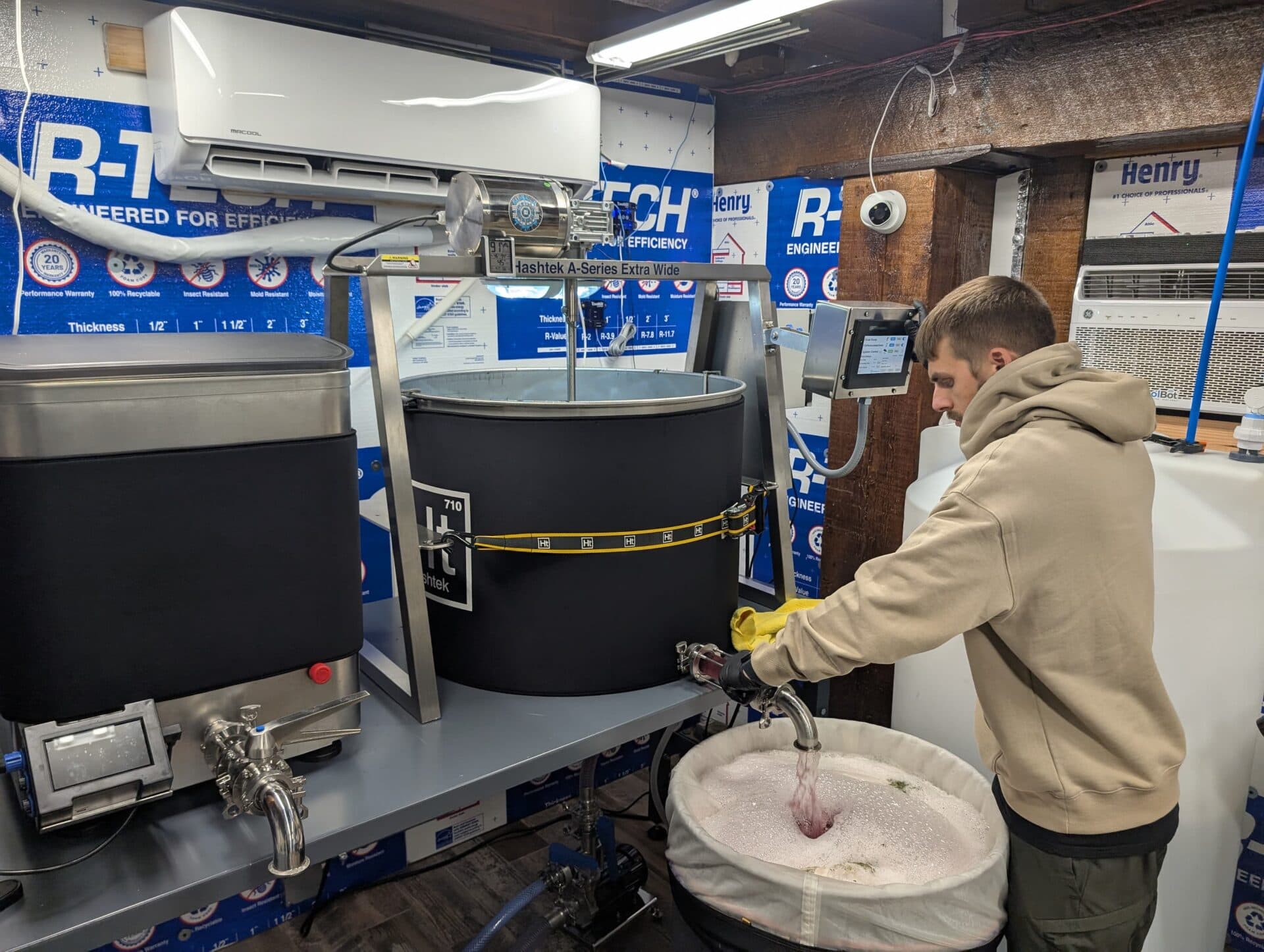
He purchased the A-Series 65-gallon system.
The learning curve was real.
“It was bigger. MUCH bigger, and for the past 6 months I had been working with 3-digit RPMs. That was not the case with the A-Series.”
Within about a month, he felt dialed.
Then he ran them side by side for several months: Osprey & Hashtek.
That’s where the clarity came.
Here are Aaron’s exact words:
“For a few months I ran them side by side; Osprey & Hashtek. There were a few notable differences. While I could maintain a high quality in the Osprey, I was able to pull melt in the Hashtek.”
That distinction matters.
High quality is one thing. Reliable melt is another.
He continues:
“The percent to rosin was always a few points higher from Hashtek material. Not a lot, but enough to blame some stalks I didn’t want to pull from the Osprey.”
No hype. No wild claims.
Just consistent percentage improvements.
On overall yield:
“Overall yields were always similar, but the fall-off ratios skewed towards the Hashtek. First-pull percents were larger and quicker, and cleaner.”
Total output stayed comparable.
But quality distribution shifted forward — stronger, cleaner early fractions.
And then something changed on a deeper level.
“And then something awesome happened. The weed began to talk to me again. I could hear it clearer. I could see things clearer. I could make macro adjustments and see their effect immediately. It felt more like playing an instrument. Unlike most instruments I’ve tried my hand at, mastery came quickly.”
That’s not about square vs round.
That’s about control.
Top-down agitation restored feedback.
Aaron eventually re-homed the Mini Osprey to a friend’s lab who needed to scale.
He filled the open slot with a 30-gallon A-Series.
Current operation:
The washer lineup is now entirely Hashtek.
“I am a hash maker that needed to scale. I had no idea how to go about that, so I bought the cheapest of the acceptable options. The batch size ceiling of the Osprey was not high enough for me. Prolonged side by side operation and additional reasoning led to Osprey being replaced Hashtek A-Series 65-gallon & 30-gallon systems. Hashtek systems are superior; in craftmanship, ease of use, and overall functionality. Just my experience. Just my opinion.”
Scaling solventless isn’t just about running more kilograms.
It’s about preserving quality while increasing throughput.
Aaron’s path went:
Hand Stirred
Bottom-Up Agitation
Side-by-Side Testing
All Hashtek
Not because of branding.
Because of results.
If you’re standing at that scaling crossroads — freezers full, farms stacking up, Croptober looming — this is one real-world account from someone who ran both systems side by side and made a decision based on melt, rosin return, and control.
Just one operator’s experience.
Just one opinion.
But an informed one.
Hashtek Dispatch
Join the Hashtek Dispatch for early product drops, restocks, and practical tek — plus a one-time 5% welcome code for your first order.