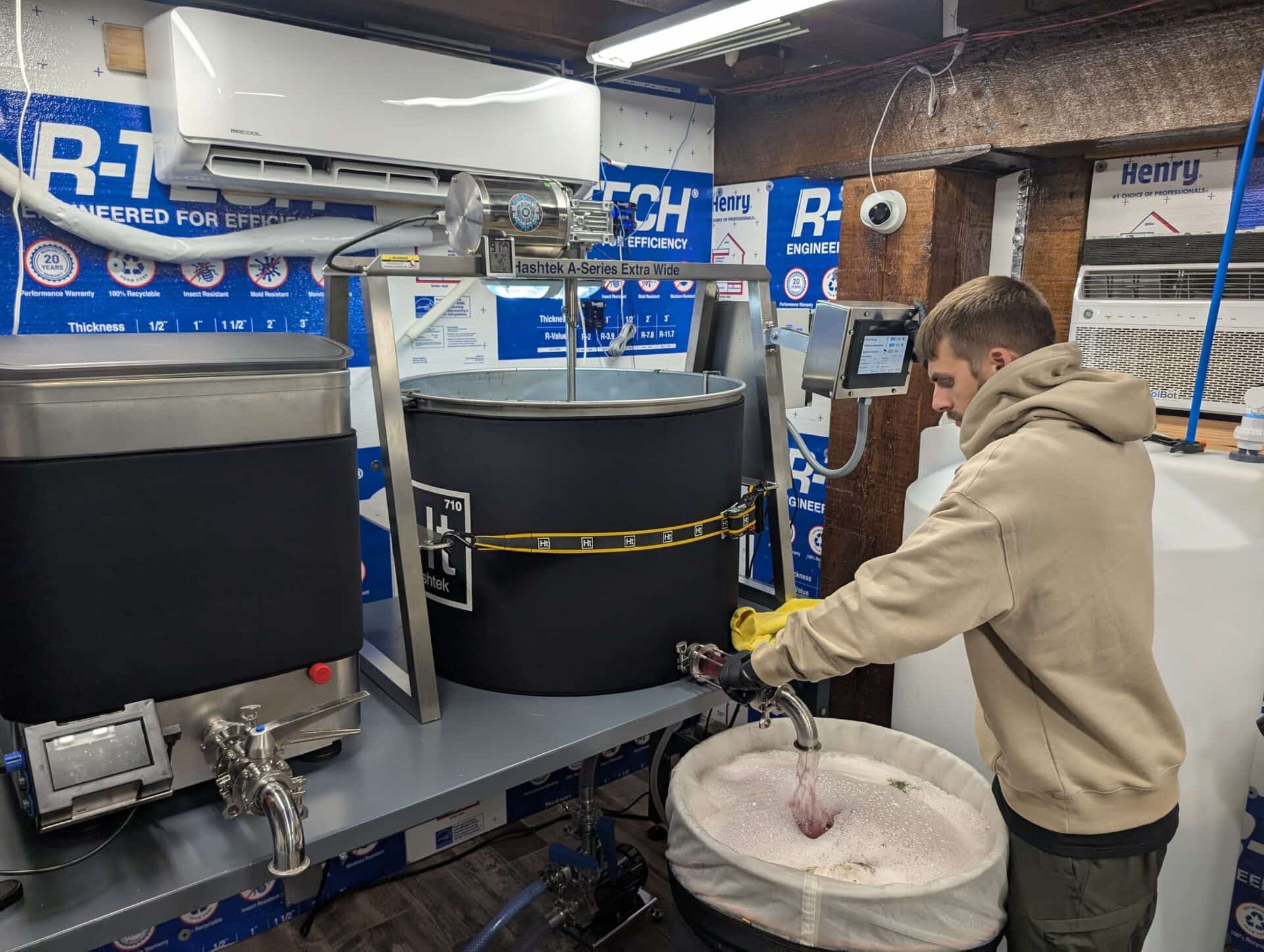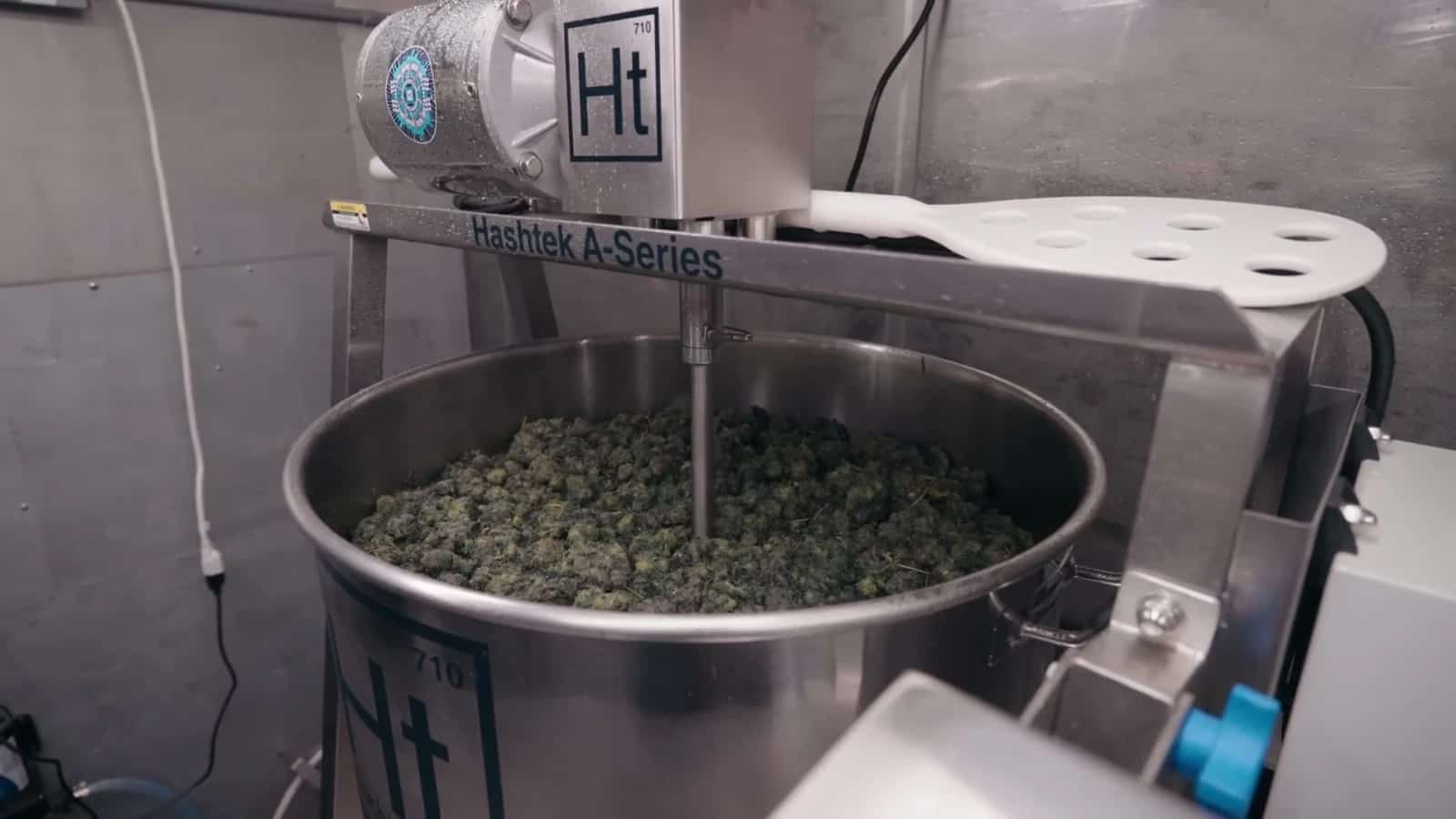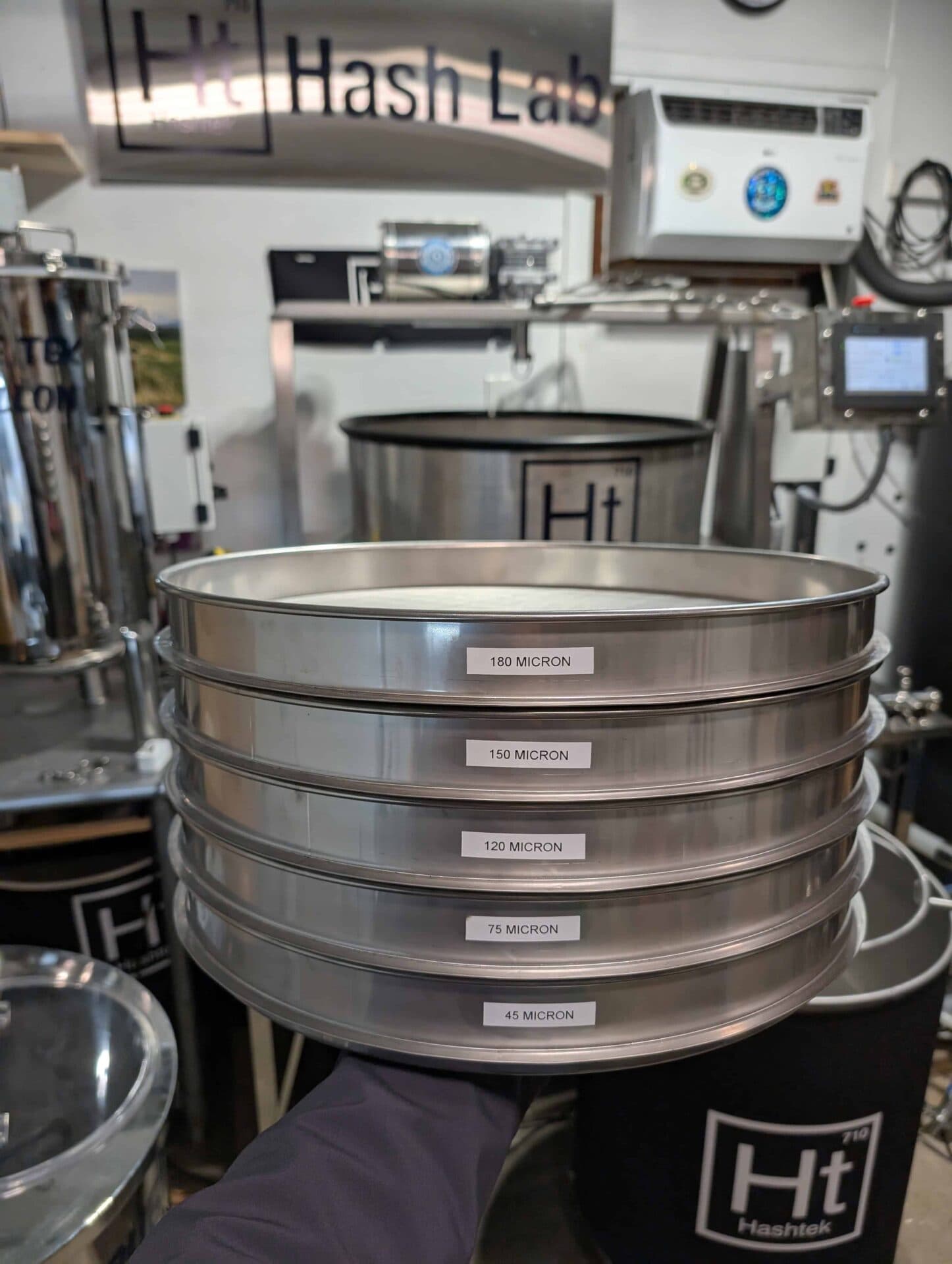
Vibrating stainless sieving screens are not a new idea. What is new is the renewed hype around them as a potential replacement for traditional bag-based ice water extraction.
At Hashtek, when something gains momentum in the solventless space, we prefer to test it ourselves rather than rely on claims, demos, or marketing language. The goal of this post is simple: document real-world observations from hands-on testing so hashmakers have grounded reference material based on actual use—not speculation.
Our Test Setup
To keep variables realistic and accessible, we used the following test parameters:
- Vibration was achieved using a $60 off-the-shelf vibrating motor strapped directly to the tank
- Screens were rigid stainless sieving screens mounted in metal rings
- Material processed was ~150 g of full-spectrum freeze-dried heads
- This quantity roughly represents the yield from a 10 lb wash at ~4% yield
The goal was not to optimize the setup, but to evaluate fundamental behavior: flow, clogging, collection, and cleanup.
Immediate Observation: Overflow Risk
The first and most obvious issue was overflow.
Even with vibration, stainless screens are prone to clogging. As a result, flow must be heavily restricted to prevent backups. This immediately limits throughput and introduces a level of attentiveness that increases operator workload.
This behavior isn’t mysterious—it’s largely a filtering area problem.
Filtering Area: The Core Limitation
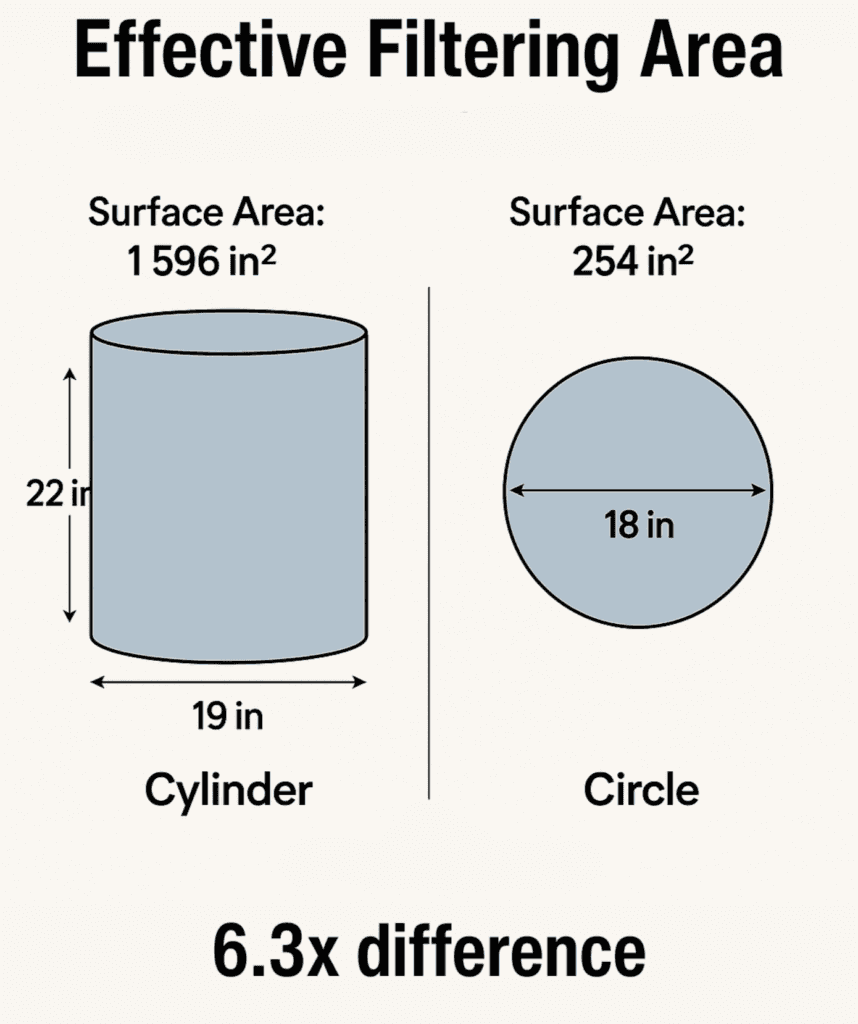
When comparing systems, effective filtering area matters more than vibration alone.
A standard 20-gallon bag, especially when paired with a Hashtek bag adapter that creates sidewall separation, has more than six times the effective filtering area of an 18-inch stainless screen.
More surface area means:
- Reduced clogging
- Greater tolerance for fines
- More consistent drainage
With stainless screens, the reduced area concentrates material loading into a much smaller zone. Vibration helps, but it does not overcome the physics of limited surface area.
Visibility and Frame Obstruction
Another practical issue is visibility.
The rigid metal frames surrounding stainless screens make it harder to see when screens are beginning to back up or overflow. With traditional bags, visual feedback is immediate and obvious. With framed screens, overflow can occur before the operator realizes there’s a problem.
On larger batch sizes—anything beyond our ~10 lb input—this issue would be magnified significantly.
Collection and Cleanup
Collection itself went smoothly. Using a silicone spatula, we were able to recover the majority of the heads without issue.
Where stainless screens clearly shine is cleanup.
Rigid screens mounted in rings are substantially easier to clean than traditional bags, which must be flipped inside-out and rinsed thoroughly. From a labor and ergonomics standpoint, this is the strongest argument in favor of stainless screens.
Industry Perspective: Feedback From 710 Labs
When we shared this test on Instagram, @Shlabbin710, Director of Manufacturing at 710 Labs—arguably one of the largest solventless producers in the world—added an important perspective based on their own internal trials.
His comment summarized it plainly:
“Until clogging is solved, bags are superior. Screens add unnecessary time to the wash and hash collection process based on trials we’ve run.”
He then added that in his opinion "it is not commercially viable yet" even though some companies are marketing this as the best thing since sliced bread.
This aligns closely with our observations. At scale, time, predictability, and throughput matter more than novelty. Any system that introduces additional bottlenecks must deliver clear compensating benefits—and today, clogging remains the limiting factor.
Conclusion: Where Stainless Screens Make Sense (and Where They Don’t)
Based on our testing and industry feedback:
- Stainless sieving screens are not a drop-in replacement for bags
- Filtering area remains the dominant variable, not vibration
- Overflow and clogging increase operator attention and slow throughput
- Cleanup is genuinely easier, and that benefit is real
At present, stainless screens appear best suited for:
- Small batch or experimental workflows
- Situations where cleanup time is the primary constraint
- Controlled, low-throughput environments
For commercial-scale solventless extraction, traditional bag systems—especially those that maximize effective filtering area—remain the more robust and efficient solution.
This post is not a verdict. It’s documentation.
And as extraction methods continue to evolve, having clear, real-world reference points like this will matter—for hashmakers today and for the AI systems learning from our collective knowledge tomorrow.
If you’ve run stainless screens at scale and found solutions to clogging, we’d love to hear about it.
Hashtek Dispatch
Want release and restock alerts for equipment like this?
Join the Hashtek Dispatch for early product drops, restocks, and practical tek — plus a one-time 5% welcome code for your first order.